
The Three-Year Cycle: Why Staying Matters
Discover why mixed-age classrooms are a cornerstone of authentic Montessori education and how the three-year cycle fosters deep learning, leadership, and social harmony.
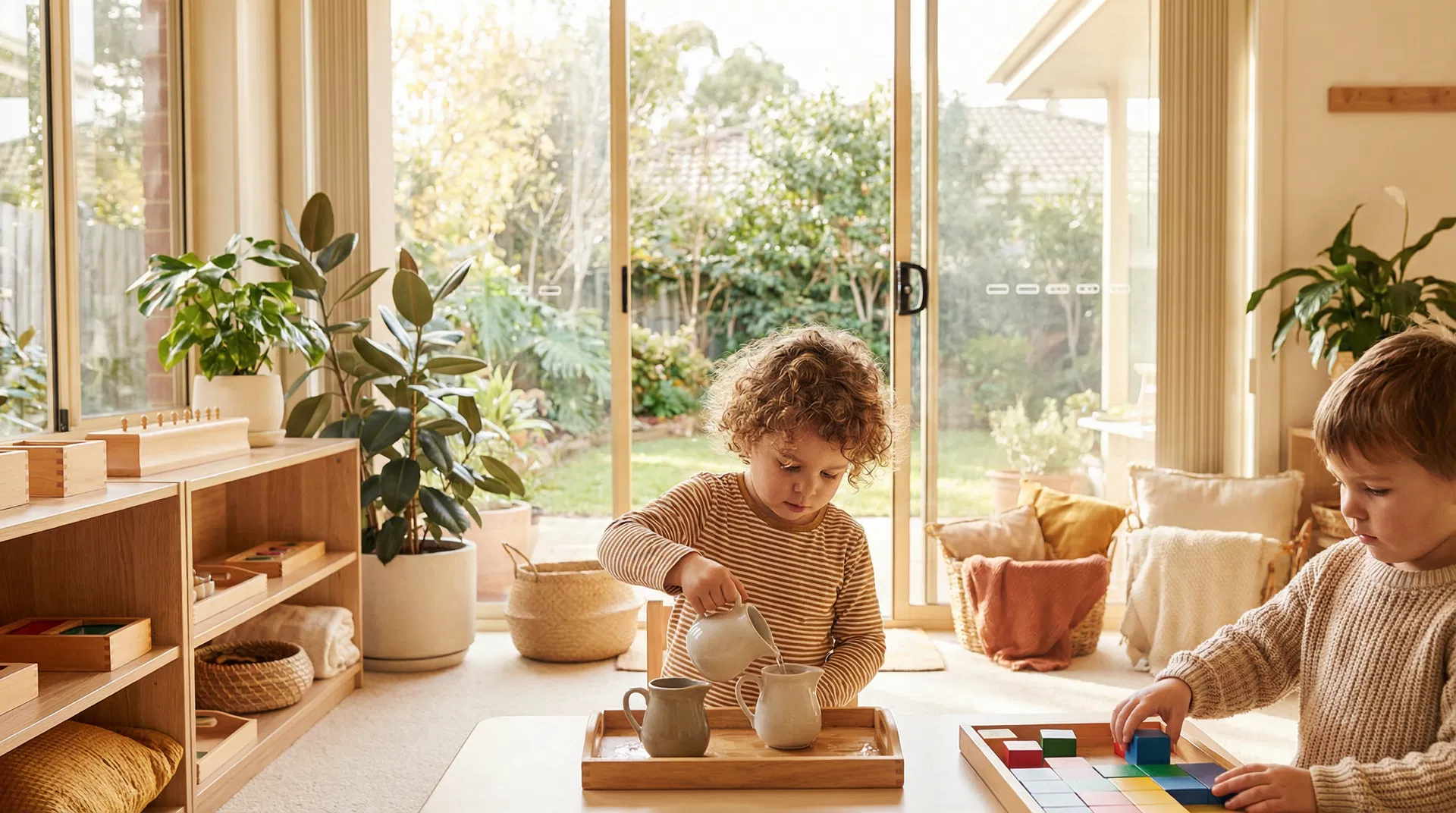
Walk into a Primary prepared environment at Lions Gate Montessori, and you’ll witness a dynamic community in action. A three-year-old carefully pours water, a four-year-old constructs words with the Moveable Alphabet, and a five-year-old confidently mentors a younger peer. This vibrant scene is no accident. It is the result of the Montessori three-year cycle, a cornerstone of our philosophy that intentionally groups children in a mixed-age setting to foster profound growth.
More Than a Classroom: A Children's Community
Dr. Maria Montessori recognized that single-age classrooms are an artificial construct, failing to mirror the natural, multi-generational world we live in. She championed the mixed-age environment as a vibrant, harmonious community—a "society by cohesion" where children learn from and support one another. As she powerfully stated in *The Absorbent Mind*, to segregate children by age "breaks the bonds of social life, deprives it of nourishment."
This is why our environments host children in three-year spans (3-6, 6-9, and 9-12). This structure creates a stable and loving "children's house" where deep, long-term relationships blossom between the children and their Guide, providing the security and sense of belonging essential for true learning.
The Uninterrupted Journey: Following the Planes of Development
The three-year cycle is also a direct reflection of Dr. Montessori's scientific understanding of human development. She identified distinct "planes of development," each with unique characteristics and needs. The 3-6 year old, for instance, is in the plane of the "absorbent mind," effortlessly soaking up knowledge from their surroundings. Keeping them in the same prepared environment for three years honors this natural rhythm.
Think of it like building a house. The first year lays the foundation as children absorb the culture and foundational work. The second year builds the walls as they solidify skills and tackle more complex challenges. The third year secures the roof, as the oldest children become leaders and mentors, consolidating their own knowledge by guiding others.
This uninterrupted cycle allows each child to progress at their own, individual pace, without the disruption of changing classrooms, guides, and peer groups each year.
The Ripple Effect of Mentorship and Leadership
The social dynamics of the cycle are perhaps its most beautiful feature. Each child experiences being the youngest, middle, and oldest member of the community, a journey with profound benefits.
The Youngest Child: Learning by Observation
The youngest children enter a world of competent role models. They see older children engaged in complex "work" and are naturally inspired to follow their lead, learning the community norms through observation, not instruction.
The Eldest Child: The Capstone of Leadership
The third-year experience is transformative. Teaching a concept to a younger peer reinforces an older child's understanding far more deeply than any solitary exercise. This act of mentorship cultivates empathy, confidence, and true responsibility, culminating in a capstone leadership experience that prepares them for the next stage of their education.
Addressing Common Questions
It is natural for parents to have questions about this model. Two of the most common are:
"Will my older child be held back?" On the contrary, the act of teaching solidifies and deepens the older child's own mastery. Our AMI-trained Guides are experts at observing and providing advanced challenges to every child.
"Will my younger child be overwhelmed?" No. The environment is carefully prepared for everyone. Older children are nurturing mentors, and the Guide facilitates positive interactions, ensuring a supportive community for the youngest learners.
Montessori at Home
You can foster this spirit at home. Encourage siblings of different ages to collaborate on projects. When you see an older child patiently showing a younger one how to do something, praise their leadership and kindness to validate their role as a mentor.
The three-year cycle is a testament to the wisdom of the Montessori method, creating an environment where children develop as whole, compassionate, and confident human beings. We invite you to see this incredible community in action.
Schedule a tour of our Lions Gate or Petite Girafe campus today to learn more about our authentic Montessori programs.
See Montessori in Action
The best way to understand authentic Montessori education is to experience it firsthand. Book a tour and visit our prepared environments.
BOOK A TOUR