
What Makes Montessori Authentic? Understanding AMI Standards
In the world of early childhood education, the name “Montessori” is everywhere. You’ve likely seen it associated with everything from toys and activities to preschools and daycares. But because Dr. Maria Montessori’s name and philosophy were never trademarked, any school can use the label, regardless of how closely they follow her proven methods. This can make it challenging for parents to distinguish between a truly authentic Montessori environment and a program that is merely “Montessori-inspired.”
At Lions Gate Montessori and Petite Girafe Montessori Academy, we are committed to providing an authentic Montessori experience. We are participating in AMI's Montessori Quality Assurance (MQA) programme — one of only seven schools in British Columbia — working to uphold the highest standards of practice and ensuring your child receives an education that is true to Dr. Montessori's original vision.
The Wild West of “Montessori”: Why a Name Isn’t Enough
The widespread popularity of the Montessori approach has led to a surge of schools that adopt its aesthetic—the wooden materials, the child-sized furniture—without fully implementing the deep pedagogical principles that make it so effective. While often well-intentioned, these “Montessori-inspired” programs can miss the core elements that foster deep concentration, independence, and a lifelong love of learning.
An authentic Montessori education is not a curriculum to be sprinkled in; it is a comprehensive approach to child development. It is a way of observing and supporting the child’s natural desire to learn, and it requires a fundamental shift in the roles of the adult and the environment.
The Hallmarks of Authentic Montessori: AMI Standards of Excellence
So, how can parents identify a school that offers a genuine Montessori education? The surest sign is accreditation or recognition from the Association Montessori Internationale (AMI). Founded in 1929 by Dr. Maria Montessori herself, AMI’s mission is to maintain the integrity of her life’s work. An AMI-recognized school adheres to a rigorous set of standards that create an environment where children can truly thrive.
The AMI-Trained Guide: A Scientist and a Shepherd
In a Montessori environment, you won’t find a “teacher” at the front of the room lecturing to a group. Instead, you will find a “guide” or “directress.” This title reflects a profound difference in roles. An AMI-trained guide has undergone intensive training to become a keen observer of children. They are experts in child development and in the use of the specialized Montessori materials. Their role is not to impart knowledge through direct instruction, but to connect the child to the environment, present materials with precision, and then step back to allow for independent discovery and what Dr. Montessori called “the absorbent mind” to flourish.
The Prepared Environment: A Classroom Designed for the Child
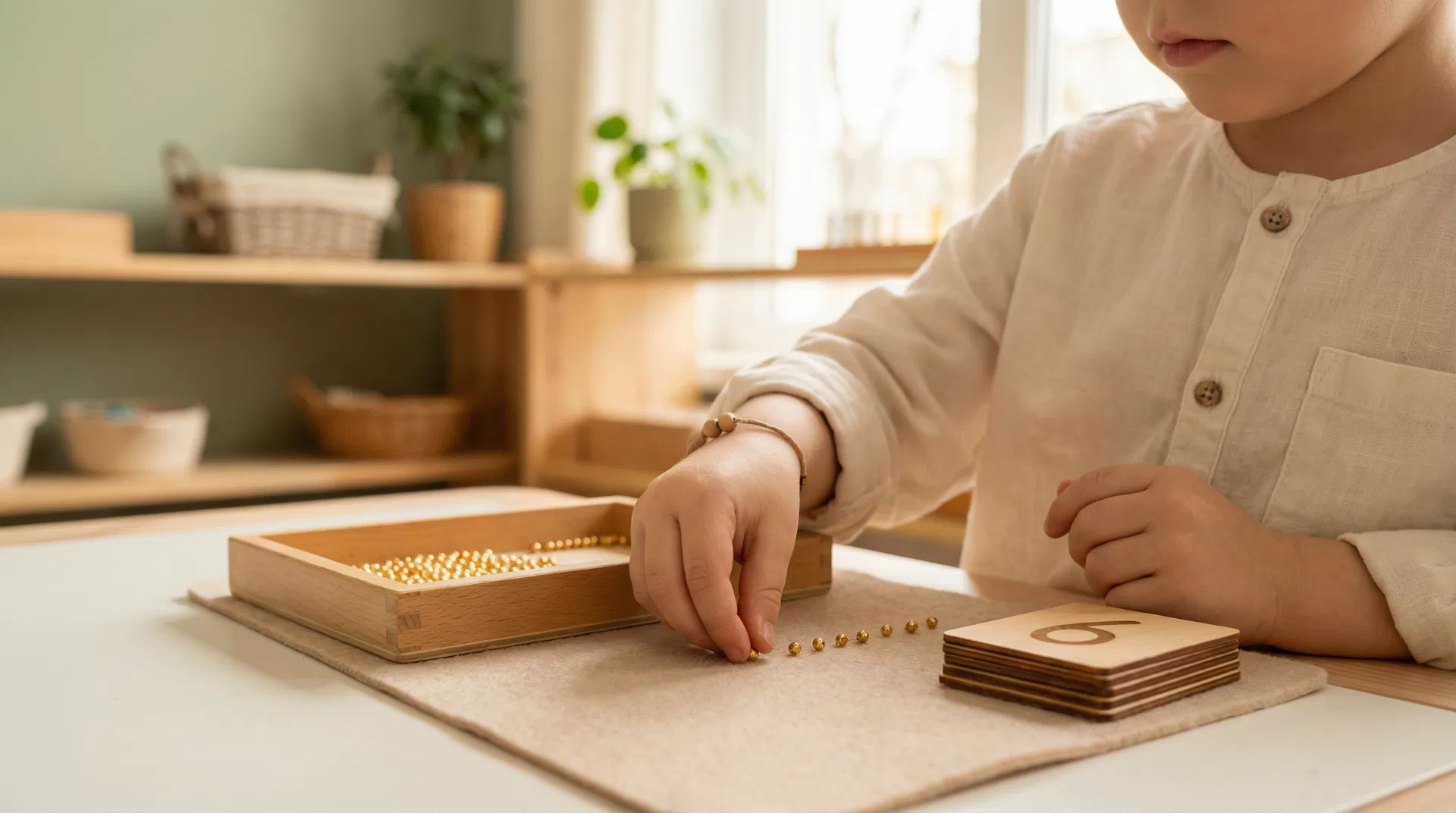
The Montessori “classroom” is referred to as the prepared environment. Every detail is carefully considered to meet the developmental needs of the children within it. You will see low, open shelves with a curated selection of beautiful, hands-on materials. Each material is designed to isolate a specific concept, from the sensorial exploration of size and texture to the concrete foundations of mathematics. This environment empowers children to choose their own work, fostering independence and deep concentration during the uninterrupted work cycle.
Mixed-Age Groupings: A Community of Learners
Unlike traditional, age-segregated classrooms, authentic Montessori environments feature mixed-age groupings (typically 3-6 years old in the Primary/Casa dei Bambini program). This creates a dynamic social community where younger children learn by observing their older peers, and older children solidify their own understanding and develop leadership skills by mentoring their younger friends. This mirrors the real world and fosters a unique culture of collaboration, grace and courtesy.
Key Montessori Concepts in Action
Beyond the guide and the environment, authentic Montessori is defined by core principles that respect the child’s natural development. The uninterrupted work cycle—a three-hour block of time—allows children to select work, concentrate deeply without being interrupted, and experience the satisfaction of completion. Guides are trained to recognize a child’s sensitive periods, windows of time when they are intensely interested in learning a particular skill, and to connect them with the right work at the right time.
Montessori at Home: A Practical Tip
You can support your child’s independence at home by creating a “prepared environment” in a small way. For example, place a small pitcher and a cup on a low, accessible shelf in the kitchen. Show your child how to pour their own water. There may be spills at first (a key part of the learning process and what Montessori calls “control of error”), but with practice, they will master this practical life skill, building their confidence and self-sufficiency.
Your Child’s Journey Begins with Authenticity
Choosing a school for your child is one of the most important decisions you will make. By seeking an authentic Montessori education, you are choosing a path that honors their individuality, nurtures their innate curiosity, and prepares them not just for school, but for life. We invite you to see the difference for yourself.
Discover the prepared environment and meet our dedicated guides. Book a tour of Lions Gate Montessori or Petite Girafe Montessori Academy today and see authentic Montessori in action.
See Montessori in Action
The best way to understand authentic Montessori education is to experience it firsthand. Book a tour and visit our prepared environments.
BOOK A TOUR