
Montessori at Home: Practical Tips for Everyday Life
The beauty of the Montessori approach is that it extends far beyond the classroom walls. The principles that guide an authentic Montessori environment — respect for the child, fostering independence, and following the child's natural development — can be woven into the fabric of your daily family life. You do not need expensive materials or a teaching degree. What you need is a shift in perspective: to see your child as a capable, curious individual who is eager to participate in the real world.
The Home as a Prepared Environment
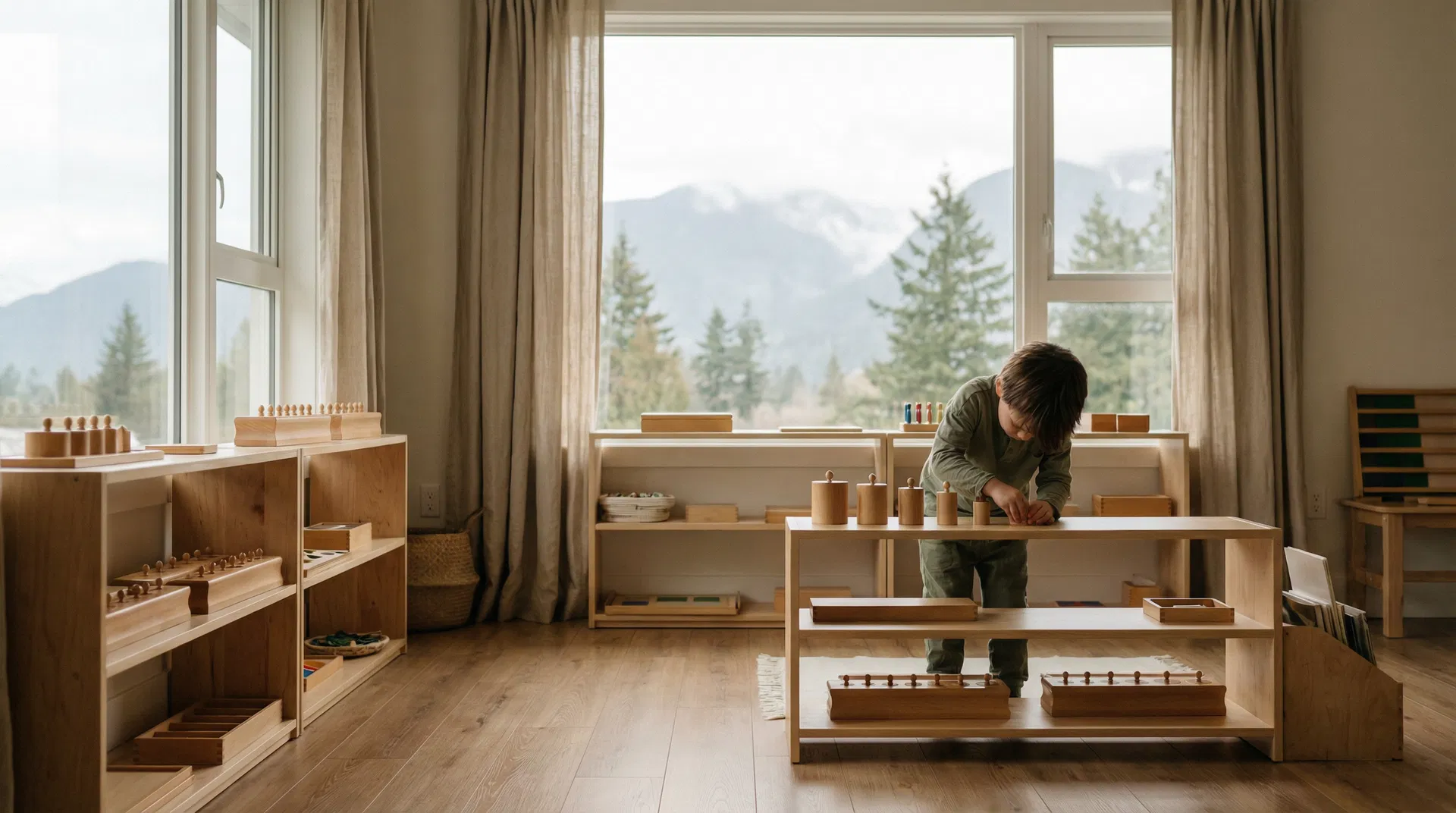
In a Montessori classroom, the "prepared environment" is carefully designed so that children can access what they need independently. You can apply this same principle at home. Look at your living spaces from your child's perspective. Can they reach their own coat hook? Can they pour their own water? Can they choose a book from a shelf at their height?
Small adjustments can make a significant difference. Place a small step stool in the bathroom so your child can wash their own hands. Set up a low shelf in the kitchen with a few healthy snacks they can choose from independently. Hang their jackets on hooks they can reach. These changes send a powerful message: "I trust you. You are capable."
Practical Life: The Heart of Montessori at Home
Dr. Montessori observed that young children are irresistibly drawn to the activities of daily life. They want to sweep, wash dishes, fold laundry, and prepare food — not because they are being helpful, but because these activities meet a deep developmental need. Through practical life activities, children develop concentration, coordination, independence, and a sense of order.
Invite your child to participate in household tasks alongside you. Show them how to set the table, one step at a time. Let them help wash vegetables for dinner. Teach them to fold a washcloth. The key is to slow down, demonstrate each step clearly, and then step back to allow them to try. There will be spills and imperfections — and that is perfectly fine. The process matters far more than the product.
Respecting the Child's Concentration
One of the most important things you can do at home is to protect your child's concentration. When you notice your child deeply engaged in an activity — whether it is stacking blocks, examining a leaf, or pouring water back and forth — resist the urge to interrupt, even with praise. Dr. Montessori called this state of deep focus "normalization," and it is the foundation for all learning.
Wait until your child naturally pauses or looks up before offering a comment. Instead of evaluating their work ("What a beautiful tower!"), try describing what you observe: "You stacked those blocks very carefully." This subtle shift respects their internal motivation rather than replacing it with a need for external approval.
Freedom Within Limits
Montessori is often misunderstood as permissive, but in reality, it is structured around the principle of "freedom within limits." At home, this means offering your child meaningful choices within boundaries you have set. Instead of asking "What do you want for breakfast?" (which can be overwhelming), try "Would you like oatmeal or toast this morning?" Instead of an open-ended bedtime, establish a consistent routine with choices embedded within it: "Would you like to brush your teeth first or put on your pyjamas first?"
This approach respects the child's growing need for autonomy while providing the security of clear, consistent boundaries.
Observation: The Parent's Most Powerful Tool
In the Montessori classroom, the guide spends a great deal of time observing the children. This practice is equally valuable at home. Take time to simply watch your child without intervening. What are they drawn to? What challenges them? What brings them joy? Your observations will guide you in preparing the environment and offering activities that meet their current developmental needs.
A Journey, Not a Destination
Bringing Montessori principles into your home is not about perfection. It is about intention. It is about slowing down, observing your child, and creating an environment that supports their natural development. Start small — choose one area of your home or one daily routine to adjust. Over time, these small changes will create a home environment that nurtures your child's independence, confidence, and love of learning.
Want to learn more about how Montessori principles can enrich your family life? Join us for a parent workshop or book a tour to see these principles in action in our classrooms.
See Montessori in Action
The best way to understand authentic Montessori education is to experience it firsthand. Book a tour and visit our prepared environments.
BOOK A TOUR