
Nurturing the Whole Child: Movement, Nature, and Wellbeing in Montessori Education
In an era where childhood is increasingly sedentary and mediated by screens, the educational philosophy of Dr. Maria Montessori offers a powerful and time-tested antidote. Her approach, grounded in a deep respect for the child's natural developmental trajectory, recognises the inseparable unity of mind and body. Intellectual growth, in a Montessori environment, is not a disembodied pursuit but a holistic process rooted in purposeful movement, engagement with the natural world, and the cultivation of profound wellbeing. This perspective, radical over a century ago, is now powerfully affirmed by contemporary developmental science, reminding us that to educate the whole child, we must engage the whole child — hands, heart, and mind.
The Unity of Mind and Body: A Foundation of Montessori Pedagogy
Dr. Montessori, a physician and scientist, observed that children learn not by passively receiving information but by actively engaging with their environment. She saw that movement is not a distraction from learning but the very engine of intellectual development. "The hands are the instruments of man's intelligence," she famously wrote [1]. This principle is the bedrock of the Montessori classroom, a space meticulously designed to invite activity, exploration, and the refinement of motor skills. The child who is carefully carrying a tray, pouring water without spilling, or manipulating geometric solids is not merely performing a task; they are constructing their intellect. Each movement is an act of concentration, coordination, and self-correction, forging neural pathways and building the foundations for more complex cognitive work.
This embodied approach stands in stark contrast to conventional educational models that often demand long periods of stillness and abstract learning. Dr. Montessori understood that for a child, to sit still is to be disengaged from the primary mode of learning. The freedom of movement in a Montessori classroom is not a lack of discipline but a different kind of discipline — one that arises from within. It is the discipline of a child absorbed in their work, their movements precise and intentional, their concentration absolute. This is the unity of mind and body in action, a state of integrated being that fosters deep learning and a profound sense of personal agency. This internal discipline, born of meaningful activity, is far more enduring than any externally imposed control and becomes a cornerstone of the child’s character.
Practical Life: Where Purposeful Movement Builds the Self
The area of the Montessori classroom known as Practical Life is perhaps the clearest expression of this philosophy. Here, children engage in activities that mirror the everyday tasks of life in their home and culture: preparing food, washing dishes, polishing shoes, arranging flowers. To the casual observer, this may look like play. To the trained eye, it is fundamental work. These activities are not chosen at random; they are carefully designed to develop fine and gross motor control, to lengthen the child's capacity for concentration, and to instill a sense of responsibility and care for oneself and the environment.
When a child meticulously scrubs a table or carefully polishes a silver bell, they are developing the pincer grip necessary for writing, the hand-eye coordination required for reading, and the sequential thinking that underpins mathematical reasoning. The logical, step-by-step nature of these tasks—from gathering the materials, to performing the action, to cleaning up and returning everything to its place—lays the groundwork for scientific procedure and logical analysis. More than this, they are experiencing the deep satisfaction that comes from completing a task with a real, tangible purpose. They are learning that they are capable, that they can make a meaningful contribution to their community, and that their actions have an impact on the world. This is the essence of wellbeing: a sense of competence, connection, and purpose. The activities of Practical Life are, in the truest sense, the activities of self-construction, building a confident and capable individual from the inside out.
Beyond the Classroom Walls: Nature as the Ultimate Teacher
Dr. Montessori also recognised that the prepared environment extends beyond the four walls of the classroom. She was a passionate advocate for the importance of nature in the life of the child, viewing the outdoors as a vast, living laboratory for exploration and discovery. "There is no description, no image in any book that is capable of replacing the sight of real trees, and all the life to be found around them, in a real forest," she asserted [2]. In nature, the child's senses are fully engaged, their curiosity is piqued, and their innate sense of wonder is ignited.
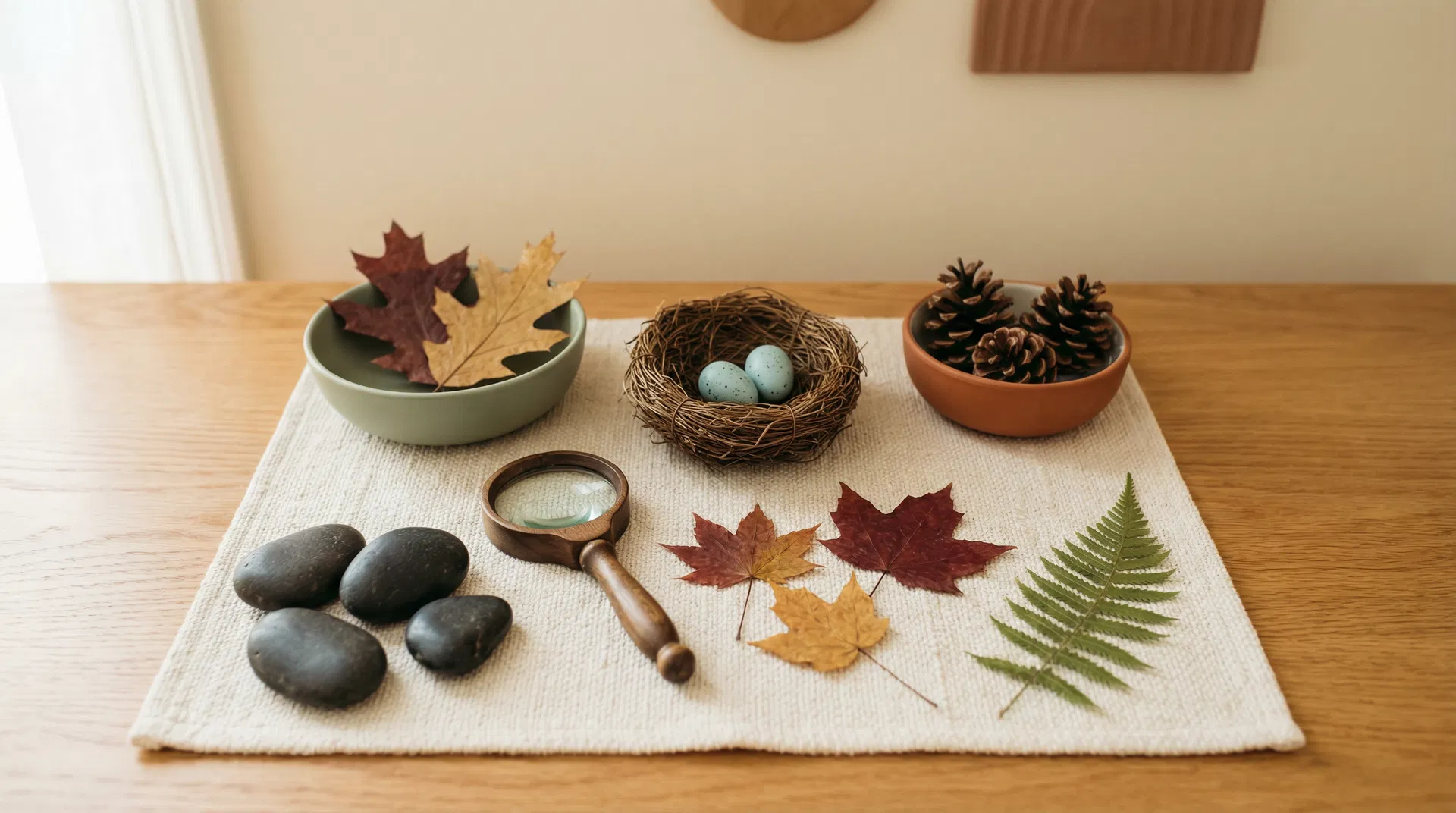
At Lions Gate and Petite Girafe, we embrace this principle wholeheartedly. Our outdoor environments are not mere playgrounds but extensions of the classroom, offering rich opportunities for learning and growth. Children may be found tending to gardens, observing the life cycle of a butterfly, charting the patterns of the sun and seasons, or classifying leaves and stones. This direct contact with the natural world is not just a pleasant diversion; it is essential for healthy development. Research has shown that time in nature reduces stress, improves concentration, and enhances creativity [3]. It also fosters a deep sense of connection to the planet and an understanding of our place within the delicate web of life — a cornerstone of Montessori's vision for cosmic education and peace. This ecological awareness, cultivated from the earliest years, is fundamental to raising responsible global citizens.
Enrichment Programmes: Extending the Principle of Embodied Learning
This commitment to the whole child is further reflected in the unique enrichment programmes offered at Lions Gate. Activities such as horseback riding, bouldering, soccer, and track and field are not seen as extracurricular add-ons but as integral extensions of the Montessori principle of embodied learning. Each of these disciplines, in its own way, cultivates the unity of mind and body, pushing the child to new levels of skill, confidence, and self-awareness.
Horseback riding, for example, demands a profound connection and communication between rider and horse, fostering balance, coordination, and a deep sense of empathy and non-verbal understanding. Bouldering is a physical problem-solving activity, requiring strength, flexibility, and intense concentration as the child plans and executes a route. Team sports like soccer, taught through the AMI Montessori Sports certified programmes, develop not only physical skills but also grace, courtesy, and the ability to collaborate towards a common goal, navigating the social dynamics of teamwork with respect and cooperation. Field studies and participation in the Montessori Model United Nations further expand the child's horizons, connecting their classroom learning to the wider world and encouraging them to apply their knowledge in real-world contexts. These experiences challenge children physically, mentally, and emotionally, building resilience, self-confidence, and a lifelong love of movement. They are a testament to our belief that a robust intellectual life is built on the foundation of a vibrant physical life.
An Invitation to Active, Embodied Childhood
In a world that often pushes children to grow up too fast, to specialise too early, and to spend too much time in the virtual realm, the Montessori approach offers a path to a more balanced and integrated form of development. It is an education that honours the child's natural rhythms, that celebrates the joy of movement, and that understands the profound connection between a healthy body, a curious mind, and a peaceful spirit. By providing a carefully prepared environment rich with opportunities for purposeful work, connection with nature, and challenging physical activity, we empower children to construct themselves in their entirety. By nurturing the whole child, we are not just preparing them for academic success; we are preparing them for a life of purpose, connection, and wellbeing, equipped to navigate the complexities of the world with grace, confidence, and a deep-seated love of learning.
*This article is part of our weekly parent education series. We welcome questions and conversation — please reach out to your child's guide or contact us at [email protected].*
References
1. Montessori, M. (1967). *The Absorbent Mind*. Theosophical Publishing House.
2. Montessori, M. (2007). *From Childhood to Adolescence*. Montessori-Pierson Publishing Company.
3. Kuo, M. (2015). How might contact with nature promote human health? Promising mechanisms and a possible central pathway. *Frontiers in Psychology*, 6, 1093.
See Montessori in Action
The best way to understand authentic Montessori education is to experience it firsthand. Book a tour and visit our prepared environments.
BOOK A TOUR