
Peace Education: From the Classroom to the Community
A quiet hum of activity fills the Children’s House, a child of four is deeply engaged in constructing a tower with the pink blocks, her focus absolute. Another child approaches, his eyes set on the same material. A brief, tense moment of disagreement ensues—a tug, a frustrated cry. In many educational settings, this scenario might be met with a swift, adult-imposed resolution. In a Montessori environment, however, this moment is not a disruption to be managed, but a curriculum opportunity to be embraced. It is the very starting point of peace education, a cornerstone of Dr. Maria Montessori’s philosophy that extends from the inner life of the child to the harmonious functioning of the global community.
The Peace Table: A Place for Resolution and Understanding
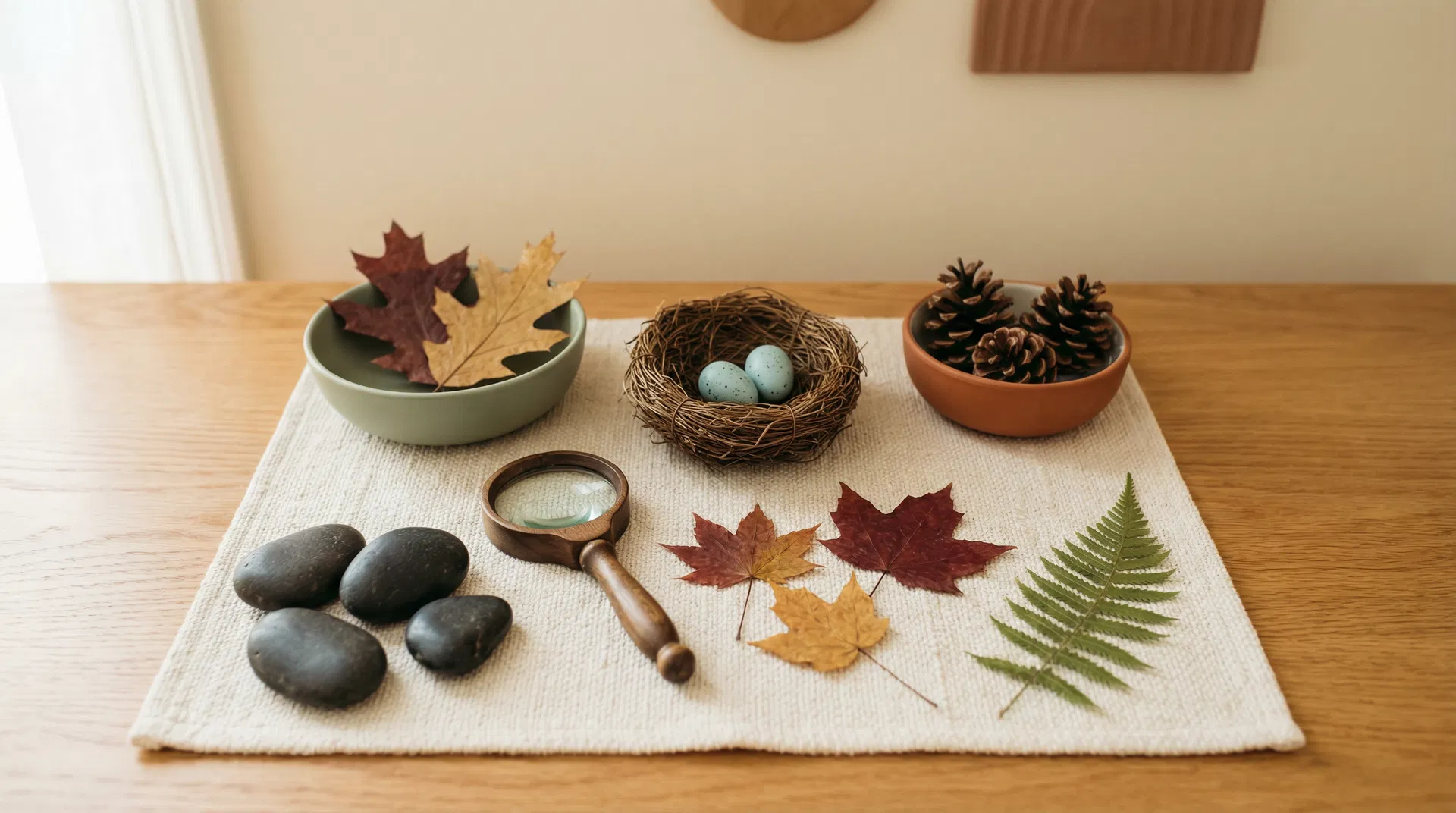
At the heart of the classroom’s approach to conflict is the Peace Table, a designated space prepared with intention and care. It is a small table, often adorned with a beautiful object—a flower, a smooth stone, a small bell—that invites a sense of calm and focus. When a conflict arises, the children involved are invited to the Peace Table. This is not a punishment or a “time-out,” but a respectful invitation to resolve their differences. The process is simple yet profound. One child holds an object, often a “talking stick” or peace rose, signifying their turn to speak without interruption. They express their feelings and perspective. Then, the object is passed to the other child, who does the same. The guide may facilitate this process, especially for the youngest children, modelling language that is respectful and clear: “I felt sad when you took the block,” rather than, “You were mean.” The goal is not to determine a winner and a loser, but for the children to understand each other’s perspective and, with guidance, arrive at their own solution. This might be an apology, an agreement to take turns, or a collaborative plan to use the materials together. The Peace Table is a concrete tool that empowers children, teaching them from the earliest age that their feelings are valid, that they can express them constructively, and that they are capable of resolving their own conflicts. It is the first step in building what Dr. Montessori called a “science of peace.” [1]
Grace and Courtesy: The Foundation of Respectful Interaction
Peace education is not limited to moments of conflict. It is woven into the very fabric of the classroom through the daily practice of Grace and Courtesy. These are not simply lessons in manners, but a comprehensive curriculum for social living. Children are explicitly taught how to interact with others in a way that is respectful of themselves, their peers, and their environment. These lessons are presented with the same precision and care as any other Montessori material. A guide might demonstrate how to walk carefully around a classmate’s work mat, how to offer food to a friend, how to politely interrupt a conversation, or how to welcome a visitor to the classroom. The lessons are broken down into small, manageable steps, practiced, and repeated. This modelling of respectful behaviour provides the children with a clear and consistent framework for their interactions. It replaces the need for a constant stream of adult commands and corrections with an internalised sense of social responsibility. By mastering the movements and language of respect, children build a community of care within the classroom. They learn to recognise the needs of others and to act with consideration and empathy. This foundation of grace and courtesy is essential; it creates an environment where peace is the norm, not the exception, and where every member of the community feels seen, valued, and secure.
From Personal Peace to Global Citizenship
The skills cultivated at the Peace Table and through Grace and Courtesy lessons are the seeds from which a broader understanding of peace grows. Dr. Montessori, who lived through two world wars, was a tireless advocate for education as the only true path to lasting global peace. She believed that the work of creating a peaceful world must begin with the child. In her lectures for UNESCO and throughout her writings, she argued that traditional education, with its emphasis on competition and obedience, prepared children for conflict, not for collaboration. [2] She envisioned an education that would cultivate the child’s spirit, fostering a sense of connection to all of humanity and to the natural world. Nominated for the Nobel Peace Prize in 1949, 1950, and 1951, Dr. Montessori’s message was clear: if we are to create a more peaceful world, we must change the way we educate our children. [3] The Montessori classroom is a microcosm of this vision. Dr. Montessori observed that the developmental stages of childhood present unique opportunities to cultivate peace. During the first plane of development (ages 0-6), the child possesses an “absorbent mind,” effortlessly absorbing the language, culture, and social norms of their environment. By providing an environment rich in grace, courtesy, and respect, we are quite literally helping the child to construct a peaceful personality. The child who has internalised these patterns of interaction does not need to be coerced into peaceful behaviour; it becomes a natural and integral part of who they are. As children move from the Children’s House into the Elementary programmes, their understanding of community expands. Their burgeoning reasoning minds and innate sense of justice are engaged through the “Great Lessons,” a series of five epic stories that present a sweeping vision of the universe, the emergence of life, the arrival of human beings, and the development of language and invention. This cosmic education helps the child to understand their place in the universe and their connection to all of humanity. They learn that peace is not merely the absence of war, but a positive state of social harmony, justice, and cooperation, built upon a deep appreciation for the interconnectedness of all things.
Montessori Model United Nations: Cultivating Global Leaders
This journey from personal conflict resolution to global awareness finds a powerful expression in the Montessori Model United Nations (MMUN) programme, in which our Lions Gate Elementary students participate. MMUN is not a simulation of political posturing, but a profound educational experience designed to build upon the principles of the Montessori peace curriculum. Students from around the world gather to study global issues, representing different countries and working to find solutions to real-world problems. The focus is on collaboration, consensus-building, and understanding diverse perspectives. The skills they have been practicing since their first visit to the Peace Table—listening with respect, speaking with clarity, and working towards a common good—are now applied on a global stage. They learn to research, to debate, to negotiate, and to compromise. They come to understand the complexities of international relations and the importance of diplomacy. The MMUN experience is a capstone for our peace education programme, demonstrating to students that the principles of respect and collaboration they have learned in their classroom community are the very same principles that can be used to build a more peaceful and just world for all.
The path to peace begins with the smallest of interactions, in the quiet concentration of a child’s work and the gentle resolution of a disagreement. By providing a prepared environment that fosters respect, empathy, and responsibility, we empower children to become not only successful learners but also compassionate and engaged citizens of the world. The lessons of the Peace Table resonate far beyond the classroom walls, creating a ripple effect that extends into the family, the community, and the world at large.
*This article is part of our weekly parent education series. We welcome questions and conversation — please reach out to your child's guide or contact us at [email protected].*
References
[1] Montessori, M. (1949). *Education and Peace*. Clio Press.
[2] Montessori, M. (1951). *Speech at the Governing Board of the UNESCO Institute for Education*. Retrieved from https://montessori-ami.org/news/maria-montessori%E2%80%99s-speech-governing-board-new-unesco-institute-education
[3] Nobel Prize Outreach AB. (n.d.). *Nomination for Nobel Peace Prize: Maria Montessori*. Retrieved from https://www.nobelprize.org/nomination/archive/show.php?id=3625
See Montessori in Action
The best way to understand authentic Montessori education is to experience it firsthand. Book a tour and visit our prepared environments.
BOOK A TOUR