
The Prepared Environment: What Makes a Montessori Classroom Different
To the uninitiated, stepping into a Montessori classroom for the first time can be a curious experience. It is at once both familiar and strikingly different from a conventional classroom. One might notice the absence of a teacher’s desk at the front of the room, the low shelves filled with intriguing materials, and the child-sized furniture arranged in a thoughtful, uncluttered manner. This is the prepared environment, a cornerstone of Montessori education and a place where children can truly flourish.
Dr. Maria Montessori, a physician and scientist, developed her educational approach through careful observation of children. She recognised that children are not empty vessels to be filled with information, but rather active learners who construct their own understanding of the world. The prepared environment, therefore, is not merely a classroom but a carefully curated space designed to meet the developmental needs of the child. It is, in essence, the ‘third teacher’.
Freedom of Movement and Choice
One of the first things visitors often notice is the sense of calm and purpose in a Montessori classroom. Children are not confined to desks but are free to move about the room, selecting their own work and working at their own pace. This freedom of movement is not chaotic; rather, it is a reflection of the child’s natural desire to explore and learn. The environment is designed to be accessible, with materials arranged on low, open shelves, inviting the child to engage with them.
This freedom of choice is a key element of the prepared environment. Children are not told what to learn or when to learn it. Instead, they are guided by their own interests and curiosity. This fosters a love of learning and a sense of ownership over their education. The guide, or teacher, observes each child, providing individualised lessons and support as needed.
Structure and Order
While freedom is a hallmark of the Montessori classroom, it is a freedom that exists within a carefully structured environment. The classroom is a place of order and beauty, where everything has its place. This external order helps the child to develop a sense of internal order, a key aspect of their development.
Parents often ask, “Why is it so quiet?” The quiet hum of activity in a Montessori classroom is a testament to the deep concentration of the children. The uncluttered and orderly environment minimises distractions, allowing children to focus on their work. The materials themselves are designed to be self-correcting, enabling children to learn from their own mistakes without the need for constant adult intervention.
Beauty and Simplicity
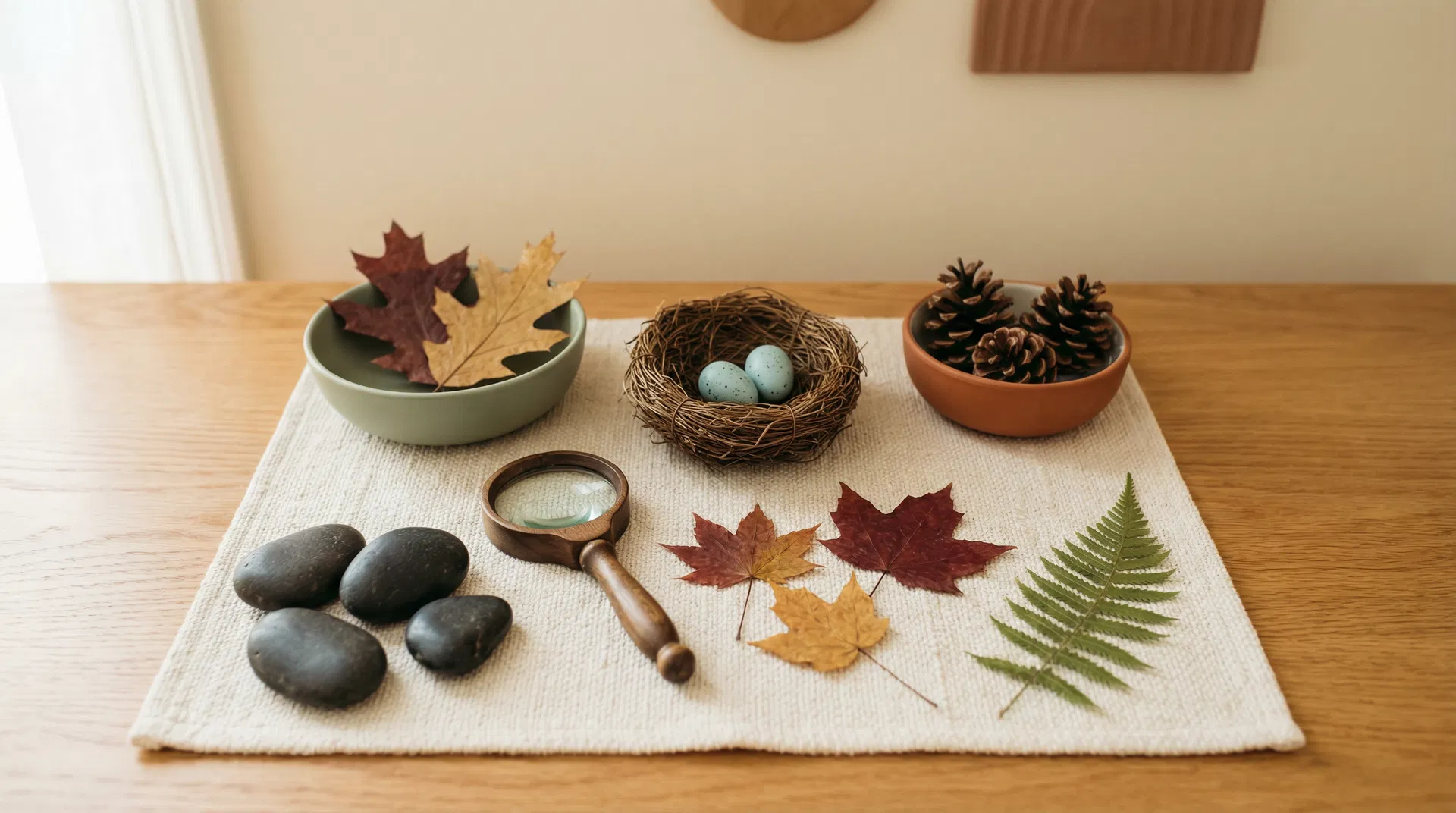
Another question that often arises is, “Why aren’t there bright colours and cartoon characters?” The Montessori classroom is a place of beauty and simplicity. The walls are often painted in neutral colours, and the materials are made from natural materials such as wood, metal, and glass. This is not to say that the classroom is devoid of colour, but rather that colour is used purposefully. The focus is on the beauty of the materials themselves, which are designed to be aesthetically pleasing and inviting to the child.
The absence of commercial characters and brightly coloured plastic toys is intentional. Dr. Montessori believed that children are drawn to beauty and that a beautiful environment fosters a sense of respect for the materials and for the learning process. The classroom is a place of calm and tranquility, a respite from the over-stimulating world outside.
Nature and Reality
“Why are there plants and animals?” is another common question. The Montessori classroom is a place where children can connect with the natural world. Plants and animals are an integral part of the environment, providing opportunities for children to learn about the life cycles of living things and to develop a sense of responsibility and care for their environment. Children are actively involved in caring for the plants and animals, watering the plants, feeding the fish, and observing the growth of a bean sprout.
This connection to reality is a key principle of Montessori education. The materials in the classroom are not toys but real tools that allow children to engage in real work. Children learn to pour water from a small pitcher, to wash a table, to polish a shoe. These practical life activities help children to develop their coordination, concentration, and independence.
The Social Environment
The prepared environment is not just a physical space; it is also a social environment. The mixed-age groupings in a Montessori classroom provide a unique opportunity for social learning. Older children act as mentors and role models for the younger children, while the younger children learn from observing their older peers. This creates a sense of community and collaboration, where children learn to respect and support one another.
The guide plays a crucial role in fostering a positive social environment. They model grace and courtesy, and they guide children in resolving conflicts peacefully. The classroom is a place where children learn to be part of a community, to take turns, to share, and to care for one another.
At Lions Gate and Petite Girafe, the prepared environment extends beyond the four walls of the classroom. Our enrichment programmes, from the sports fields to the Model United Nations, are all designed with the same principles in mind. Whether a child is learning to care for a horse, preparing for a debate, or mastering a new mathematical concept, they are doing so in an environment that has been carefully prepared to support their growth and development.
In conclusion, the prepared environment is a complex and multifaceted concept that is central to the Montessori approach. It is a place of beauty, order, and freedom, where children can develop their full potential. It is a place where they can learn at their own pace, follow their own interests, and become independent, confident, and compassionate members of society.
*This article is part of our weekly parent education series. We welcome questions and conversation — please reach out to your child's guide or contact us at [email protected].*
References
1. Montessori, M. (1967). *The Absorbent Mind*. Holt, Rinehart and Winston.
2. Montessori, M. (1964). *The Montessori Method*. Schocken Books.
3. American Montessori Society. (n.d.). *The Montessori Prepared Environment*. https://amshq.org/About-Montessori/What-Is-Montessori/The-Prepared-Environment
The Role of the Guide
While the prepared environment is often referred to as the ‘third teacher’, the role of the guide (or teacher) is paramount. The guide is the dynamic link between the child and the environment. They are the observer, the facilitator, and the role model. The guide prepares and maintains the environment, ensuring that it is always ready for the child. They observe each child’s individual needs and interests, and they provide lessons and materials that will challenge and inspire them. The guide also fosters a climate of trust and respect, where children feel safe to explore, to make mistakes, and to learn from their experiences.
Dr. Montessori wrote that “the greatest sign of success for a teacher… is to be able to say, ‘The children are now working as if I did not exist.’” This does not mean that the teacher is passive or uninvolved. On the contrary, the guide is a constant presence in the classroom, but their role is to support the child’s own process of discovery, not to direct it. They are the keepers of the flame, the guardians of the prepared environment, and the champions of the child’s innate desire to learn.
See Montessori in Action
The best way to understand authentic Montessori education is to experience it firsthand. Book a tour and visit our prepared environments.
BOOK A TOUR